


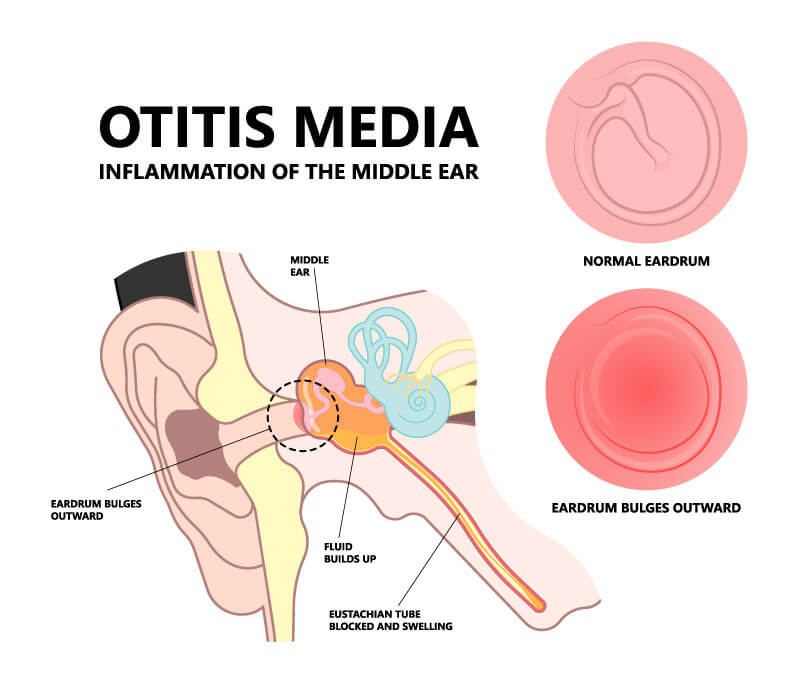
Acute otitis media is the medical name for a short-term ear infection. This type of infection affects the middle ear, which connects your outer ear to the inner ear structures that control your hearing and balance.
Children are at a higher risk of developing hearing problems after an infection, especially if it’s not treated promptly.
Learn more about acute otitis media so you can stay on top of your or your child’s symptoms and protect against hearing loss.
What Causes Acute Otitis Media?
Acute ear infections are typically the result of another issue, like an allergy flare-up or the common cold. They can be caused by bacteria or viruses. For bacterial middle ear infections, antibiotics are the most common treatment.
Children are particularly at risk for ear infections because many of their ear structures are still developing.
The eustachian tubes are responsible for transporting fluid in the middle ear into the throat for proper drainage. During childhood, these tubes may not function as efficiently as they do in adults, resulting in blockages and buildups that cause inflammation and infection.
Other risk factors for frequent ear infections include:
- Exposure to secondhand smoke
- Genetics
- Environmental factors like air pollution
- Seasonal allergies
- Cold, flu, or other upper respiratory infections
- Improper bottle feeding (laying a baby on their back to feed)
Know the symptoms to look for so you can treat acute otitis media before it gets worse.
Symptoms of Acute Otitis Media
A middle ear infection often causes ear pain and pressure. This is usually the first noticeable symptom.
Beyond acute ear pain, symptoms include:
- Pressure and fullness in the affected ear
- Muffled hearing
- Temporary hearing loss
- Ear drainage
- Perforated eardrum
Eardrum perforation often causes a sharp pain in the ear, followed by relief from inner ear pressure and discomfort.
Pediatric ear infections may cause:
- Fever
- Fussiness
- Trouble sleeping
- GI symptoms (vomiting and diarrhea)
The GI symptoms are often part of the body’s defenses as it works to clear the underlying infection. Most adults with acute otitis media don’t experience vomiting or diarrhea.
Acute vs. Chronic Otitis Media: What’s the Difference?
Note that acute otitis media is different from chronic otitis media. Acute ear infections typically resolve within a week or two. Antibiotics may be necessary if the infection is bacterial and doesn’t resolve on its own.
Chronic otitis media lasts longer (at least six weeks) and shows up as recurring, persistent ear infections and drainage.
How Acute Otitis Media Can Affect Hearing
While acute ear infections are temporary, they can still cause short-term hearing loss. When left untreated, middle ear infections may lead to more serious complications, so it’s important to seek proper assessment and treatment.
If repeated ear infections develop into chronic otitis media, this can result in conductive hearing loss, where sensory information is blocked before reaching the inner ear.
Severe eardrum perforations from acute ear infections may also cause complications.
When to See a Hearing Specialist
After an ear infection, it’s a good idea to visit an audiologist to assess your or your child’s hearing. This hearing specialist will perform a thorough exam and stay on top of any new and concerning symptoms.
Audiology visits help you identify any hearing changes early on and give you access to immediate treatments and solutions.
You should schedule an appointment if:
- You notice sudden hearing loss after an ear infection
- Your child isn’t responding to sounds normally
- You have new or worsening ringing in the affected ear (tinnitus)
- You’re concerned about your long-term hearing health
- You’ve developed chronic otitis media
Loop your primary care physician or ENT in on your concerns and book an audiology appointment to assess your hearing.
Acute Otitis Media FAQs
Have questions about acute ear infections? Find the answers you need!
Can Acute Otitis Media Cause Temporary Hearing Loss?
Yes, middle ear infections can cause temporary hearing problems like muffled hearing and ear fullness. These symptoms typically resolve once the infection has been treated.
How Long Does Hearing Loss Last After an Ear Infection?
Temporary hearing loss after an ear infection typically goes away after a few weeks in children. In adults, the hearing loss usually resolves in a matter of days after treatment.
When Should I Have My Child’s Hearing Tested After an Ear Infection?
After the infection has been treated, consider booking an audiology appointment for your child. Give their ear a few weeks to fully recover and see if their hearing returns to normal first. If they’re still experiencing symptoms, it’s time for a hearing test.
What Is the Difference Between Acute and Chronic Otitis Media?
Acute otitis media is a standard middle ear infection that’s common in children and adults. It typically lasts for up to two weeks and resolves with proper treatment. Chronic otitis media can last for months and causes recurring ear infections with drainage.
How Happy Ears Hearing Center Can Help
At Happy Ears Hearing Center, we specialize in hearing healthcare. We help patients and their families navigate life through personalized hearing treatments and devices. Our audiologists perform in-depth exams and recommend the best solutions for hearing problems.
We can help after an ear infection. Schedule an appointment to get started today!