

Keeping your ears clean helps you hear better. But earwax removal at home comes with risks, and you should know how to clean your ears properly before trying it.
At-home ear cleaning is potentially risky and can damage delicate ear structures. People commonly turn to cotton swabs in order to clear out their ears from earwax buildup, but these items aren’t always the best options for taking care of your ears.
The Surprising Purpose of Earwax: Natural Ear Protection
Why do humans have earwax? A common misconception is that earwax serves no purpose and is “dirty.” This couldn’t be further from the truth.
What Is Earwax?
The medical term for earwax is cerumen. This refers to a wax-like substance that feels sticky to the touch. It is usually dark brown, orange, or yellow in color.
Your ears naturally produce earwax in special glands located along your outer ear canal. Most of the time, earwax works its way out of your ears on its own and doesn’t cause any problems, although it can build up over time.
How Earwax Keeps Your Ears Healthy
Earwax might feel gross, but your ears produce it for a good reason. It offers protection. The sticky surface traps dirt, dust, debris, and bacteria before they can enter your inner ear canal and cause problems.
Earwax is found in the middle ear and ear canal, where it develops to preserve the balance of moisture in the ear. Harmful bacteria that could lead to infections is also held hostage by earwax.
This natural waxy substance can also buffer against water-related ear problems, like swimmer’s ear. Earwax creates a natural barrier against excess moisture and prevents unhealthy buildup deeper in your ear.
Your ears will naturally push the wax buildup toward the outer ear where it can be wiped away, making it unnecessary to continually clean them.
Why Using Q-Tips to Clean Your Ears Is Risky
Cotton swabs, also known as Q-Tips, are tiny handheld rods that have both ends covered in small wads of cotton. While you may see these in jars at your doctor’s office or have them in your medicine cabinet, they can cause severe complications within the ear if you rely on them for cleaning.
Earwax Impaction
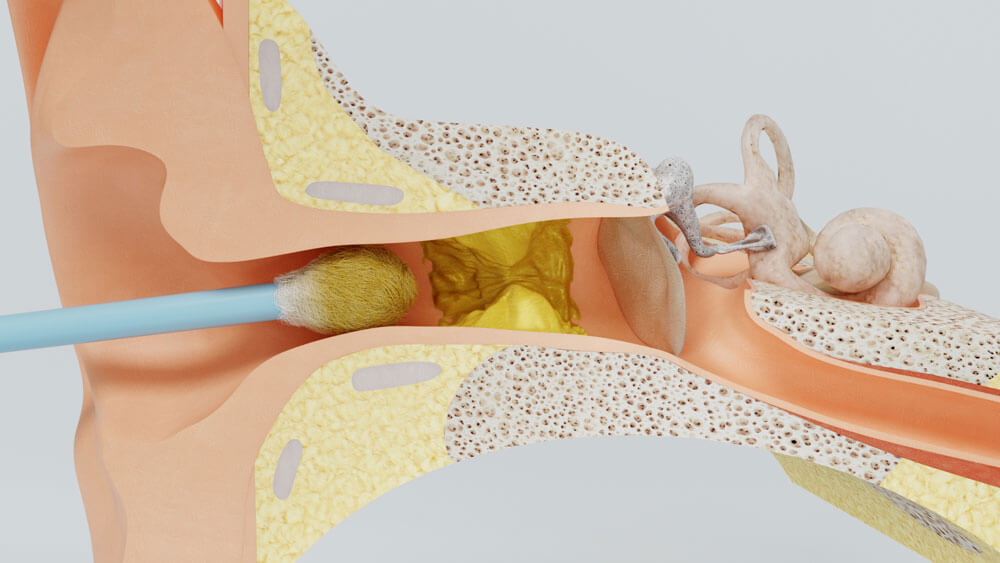
When you use a Q-Tip to clean out the earwax, you run into the danger of pushing the wax further into the ear. If this happens, it makes it harder for the wax to naturally migrate toward the outer ear, causing a thick buildup or impaction.
This may lead to an individual experiencing pain in the ear, having a sense of fullness or pressure in the ear, and an inability to hear sounds clearly.
Ear Damage
You also run the risk of causing damage to the sensitive components of your middle ear when you insert a Q-Tip too far into the ear.
Any injury to the internal organ of the ear can lead to hearing loss, and one of the most common injuries related to the use of Q-Tips for cleaning is a ruptured eardrum. This is when a hole is created in the tissue that separates the ear canal and the middle ear.
You may experience sharp pain when the perforation occurs, drainage or bleeding from the ear, hearing loss, or the sound of ringing in the ear. Though the damage can heal on its own, medical intervention may be necessary.
Increased Infection Risk
Cleaning out too much wax allows harmful bacteria to set up residence in your ear, but the process of cleaning the ear with a cotton swab can actually push the bacteria further into the ear.
Bacteria that get trapped in the middle or inner ear can lead to an ear infection, a painful condition that can impact hearing, cause drainage, or lead to a fever. Antibiotics are generally needed to treat an ear infection.
Left-Behind Debris From Broken Cotton Swabs
The tip of a cotton swab is fragile, and it is possible that pieces of the swab will come off and lodge inside the ear. If this happens, you may experience pain, discomfort, and the feeling of fullness in your ear.
Left unaddressed, it could lead to hearing loss. Never try to remove a piece of swab or another foreign object on your own. You could end up causing more damage.
How to Properly Use Q-Tips
Using a Q-Tip to clean out the interior part of your ear is never recommended. In fact, the packaging your cotton swabs may come in will have a warning to keep the product out of your ears.
The best way to use a cotton swab for cleaning is to use it on the outer ear to wipe away the wax that has made its way out of the middle ear. You can also use Q-Tips to wipe up residue or water that remains after washing your face, getting out of the shower, or leaving a swimming pool.
How to Clean Ears Without Q-Tips
It is natural to feel the need to clean your ears, especially if there is a feeling of fullness or you are experiencing muffled hearing. Though serious hearing conditions need to be seen by a physician, such as an audiologist or ear, nose, and throat specialist, there are several things you can do to properly and safely clean your ears.
Create a cleaning solution with equal parts of water and hydrogen peroxide. The hydrogen peroxide is able to soften and break down earwax, helping it dissolve and make its way more quickly out of the ear. You may also find a commercially marketed ear drop to use for wax build-up.
Tipping your head to one side, use an ear dropper to let several drops of solution fall into the ear canal. You will want the drops to sit in the ear for several minutes before you raise your head upright.
Using a clean tissue or damp washcloth, wipe away the residue that leaks out of your ear. You can also use a damp washcloth to wipe away any earwax that can be seen within the ear.
Signs You Need Professional Ear Cleaning: Earwax Buildup Symptoms
The safest way to clean ears is by getting professional ear wax removal. This is done in a doctor’s or audiologist’s office with medical-grade equipment.
How do you know when it’s time to get a professional ear cleaning? There are several earwax buildup symptoms to watch for.
Feeling Like Your Ears Are Plugged
Earwax buildup can cause a similar sensation to plugging your ears with your fingers. You might feel a sense of ear fullness, even when nothing foreign is in your ears. This is a common sign that earwax is blocking your inner ear canal and must be removed manually.
Muffled Hearing
Muffled hearing is not normal. In many cases, it’s simply a matter of earwax buildup. The wax temporarily makes noises sound like you’re underwater by reducing the strength of the sound waves that reach your eardrum.
Frequent Itching and Ear Discharge
Over time, wax buildup can make your outer and middle ear canals itchy. Earwax contains some of the same substances that make up sweat and sebum (natural skin oils).
You might also notice irregular watery discharge coming from your ear, which can worsen itching. This happens when earwax has trapped moisture in your ear before it eventually makes its way out.
If you haven’t gone swimming recently and earwax buildup is your only concern, this discharge is likely a sign that it’s time for a professional ear cleaning.
Ear Pain and Pressure
When wax buildup gets too intense, it can cause pressure and pain in your ears. The pressure buildup puts strain on your inner ear organs, leading to persistent pain with no apparent cause. If a doctor has ruled out an ear infection, earwax could be the culprit.
Ringing in the Ear (Tinnitus)
Tinnitus has many possible causes, and earwax buildup is one of them. When wax blocks the eardrum from receiving sound waves normally, it can cause distorted audio signals. This may manifest as ringing, buzzing, or other unusual sounds in your ear.
What Happens During a Professional Ear Cleaning?
You can learn how to clean your ears properly at home, but all methods will come with some level of risk. Audiologists have special equipment that safely and comfortably removes earwax and other debris from your ears. This is the safest route to take when you have plugged ears.
Manual Removal With Gentle Tools
In mild cases, audiologists can remove built-up wax with special scoops that gently remove the wax without damaging your ears. They’ll use a special light and magnifying device to see inside your ear canal and get everything out.
Vacuum Removal
Some audiologists prefer to use special ear vacuums, which use gentle suction to pull stubborn wax out of your ears. This can be more effective than scooping the wax out if you have lots of buildup.
Ear Flushing and Irrigation
Severely blocked ears call for a more intense removal method. Audiologists sometimes use pressurized water to flush out all of the earwax and trapped debris from your ear canal. The water shoots in from a syringe-type device and sweeps the ear buildup away when it flushes back out.
Frequently Asked Questions
Is It Bad to Clean Your Ears With Cotton Swabs?
Yes. Cleaning out your middle ear with cotton swabs (Q-tips) is not recommended by professionals. This at-home earwax removal method can lodge debris in your ear and cause damage to the delicate inner ear organs.
How Often Should You Clean Your Ears?
Most earwax will come out on its own, so you shouldn’t need to clean your ears often. Ear cleaning can be done at home on an as-needed basis. If you feel pain, pressure, fullness, or have other earwax buildup symptoms, you should get a professional ear cleaning.
Can Earwax Cause Hearing Loss?
Earwax can cause temporary hearing problems by blocking sound waves from reaching your inner ear. Once the earwax is removed, your hearing will go back to normal if this was the root cause of your hearing loss.
What Do Audiologists Use to Clean Ears?
Audiologists use a few different methods to safely remove earwax. They may use special scooping tools to remove the wax manually or a medical suction device that gently pulls the wax out. In more severe cases, audiologists use pressurized water to irrigate the inner ear and flush out excess earwax and debris.
How to Get Professional Help
If your ears still seem stopped up or plugged, you will want to make an appointment with a physician or audiologist. Hearing loss or concerns of tinnitus should be addressed by a healthcare professional, and the team at Happy Ears Hearing Center is ready to assist with improving your hearing and restoring your ear health.
